

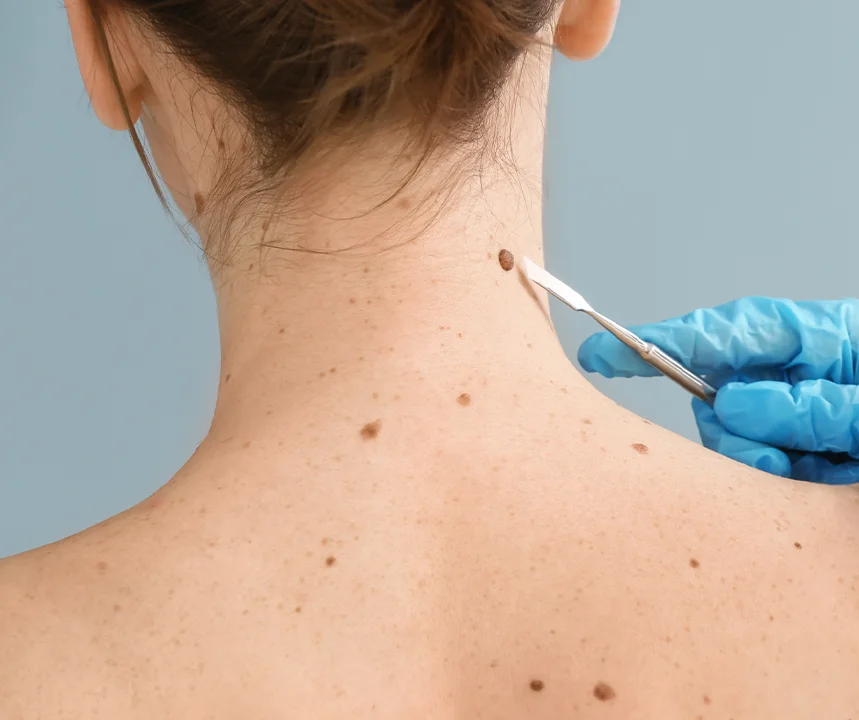
How to Spot Skin Cancer
June 19, 2026
Most people have moles, freckles, or spots they barely think twice about. And in many cases, that’s perfectly fine. But now and then, a small change in your skin can mean something more, especially here in Florida, where sun exposure is part of everyday life.
Knowing how to spot skin cancer isn’t about overreacting; it’s about paying attention. Subtle differences in colour, shape, or texture can be early warning signs. At 360 Dermatology, we often see patients who weren’t sure if a spot was worth checking. In many cases, that simple decision to come in makes all the difference.
This guide will walk you through the most important signs of skin cancer, how to tell if a spot is skin cancer, and when it’s time to have it evaluated.
Understanding Skin Cancer: What You Should Know
Skin cancer happens when skin cells start to grow in an abnormal way, most often because of UV exposure over time. That doesn’t just mean long days at the beach; it’s the everyday sun exposure that builds up slowly without you really noticing.
There are a few main types, including basal cell carcinoma, squamous cell carcinoma, and melanoma. Some are slow-growing and easier to treat, while others can become more serious if ignored.
The important thing is this: catching skin cancer symptoms early gives you more options and, in many cases, much simpler treatment.
The ABCDEs of Melanoma Detection
If you’re ever unsure about a mole or spot, the ABCDE rule is a helpful way to take a closer look. It’s something dermatologists use every day, and once you know it, you’ll start to notice these patterns more easily yourself.
- Asymmetry: One side doesn’t match the other. Most harmless moles are fairly even.
- Border: The edges look uneven, jagged, or slightly blurred rather than smooth.
- Color: You might see different shades in the same spot, brown, black, red, or lighter areas.
- Diameter: Anything larger than about 6mm (around the size of a pencil eraser) is worth keeping an eye on.
- Evolving: This is the one we pay the most attention to, any change in size, shape, colour, or how it feels.
Still trying to figure out how to tell if a spot is skin cancer? The ABCDEs method is usually the first step in narrowing things down.
Other Warning Signs of Skin Cancer
Basal Cell Carcinoma Symptoms
Basal cell carcinoma is the type we see most often, especially in areas that get a lot of sun, like the face, neck, and shoulders.
It doesn’t always look alarming at first. In fact, many people ignore it early on.
You might notice:
- A small, pearly or shiny bump
- A flat patch that blends in with your skin tone
- A sore that seems to heal, then comes back again
- A spot that bleeds more easily than expected
These can be easy to brush off, especially if they’re not painful.
Squamous Cell Carcinoma Symptoms
Squamous cell carcinoma tends to appear more noticeable and is often linked to long-term sun exposure.
Common skin cancer symptoms include:
- Firm, red bumps
- Rough or scaly patches that don’t go away
- Areas that crust over or bleed
- Growths that feel slightly tender
These skin cancer symptoms often appear in areas with chronic sun exposure, such as the scalp, ears, and hands.
General Red Flags
Not every sign of skin cancer fits neatly into a category. Sometimes it’s just a feeling that something isn’t quite right.
A few things we often tell patients to watch for:
- A spot that doesn’t heal after a few weeks
- Something new that looks different from everything else
- Itching, tenderness, or discomfort in a mole
- Bleeding without an obvious reason
- Any visible change over time
If something keeps catching your attention, there’s usually a reason.
Risk Factors for Residents of Florida
Living in Florida means more sunshine, which is great, but it does come with added risk over time. Even small, everyday exposure adds up.
We regularly see patients from Clearwater, Trinity, Wesley Chapel, Spring Hill, and Land O’Lakes who didn’t realise how much cumulative sun exposure they’d had until something changed on their skin.
Some of the main risk factors include:
- Frequent or long-term sun exposure
- A history of sunburns
- Fair skin, freckles, or lighter eye colour
- Family or personal history of skin cancer
- Tanning bed use
- Living in high UV areas like Florida
This is why routine skin cancer screenings in Florida are so important; they catch things you might not notice on your own.
How to Perform a Self-Check for Skin Cancer
If you want to get better at knowing how to spot skin cancer, monthly self-exams are one of the simplest ways to stay proactive about your skin health. You don’t need any special tools, just good lighting and a mirror.
Here’s how to do it effectively:
- Examine your entire body, including hard-to-see areas like your back, scalp, and between your toes
- Use a hand mirror or ask for help when needed
- Compare moles and spots to identify anything new or changing
- Take note of anything that matches the ABCDE criteria
- Keep a record of photos to track changes over time
Consistency is key. The more familiar you are with your skin, the easier it becomes to notice subtle changes.
Booking a Consultation
Everyone should know how to spot skin cancer. While not every unusual spot is dangerous, waiting too long to find out can be. If you’ve noticed any signs of skin cancer or just want peace of mind, a professional evaluation is the most reliable next step.
At 360 Dermatology, Dr Aparna Ambay, a board-certified dermatologist with extensive experience in diagnosing and treating skin cancer, leads thorough, patient-focused skin cancer screenings in Florida.
Whether it’s your first check or part of a routine, having an experienced specialist assess your skin can make all the difference.
Book a Skin Cancer ConsultationShare this
[Sassy_Social_Share]